SAVE 15% . USE CODE: HOLIDAY15


Difference Between Wool and Satin Varsity Jacket: Which One Is Right for You?

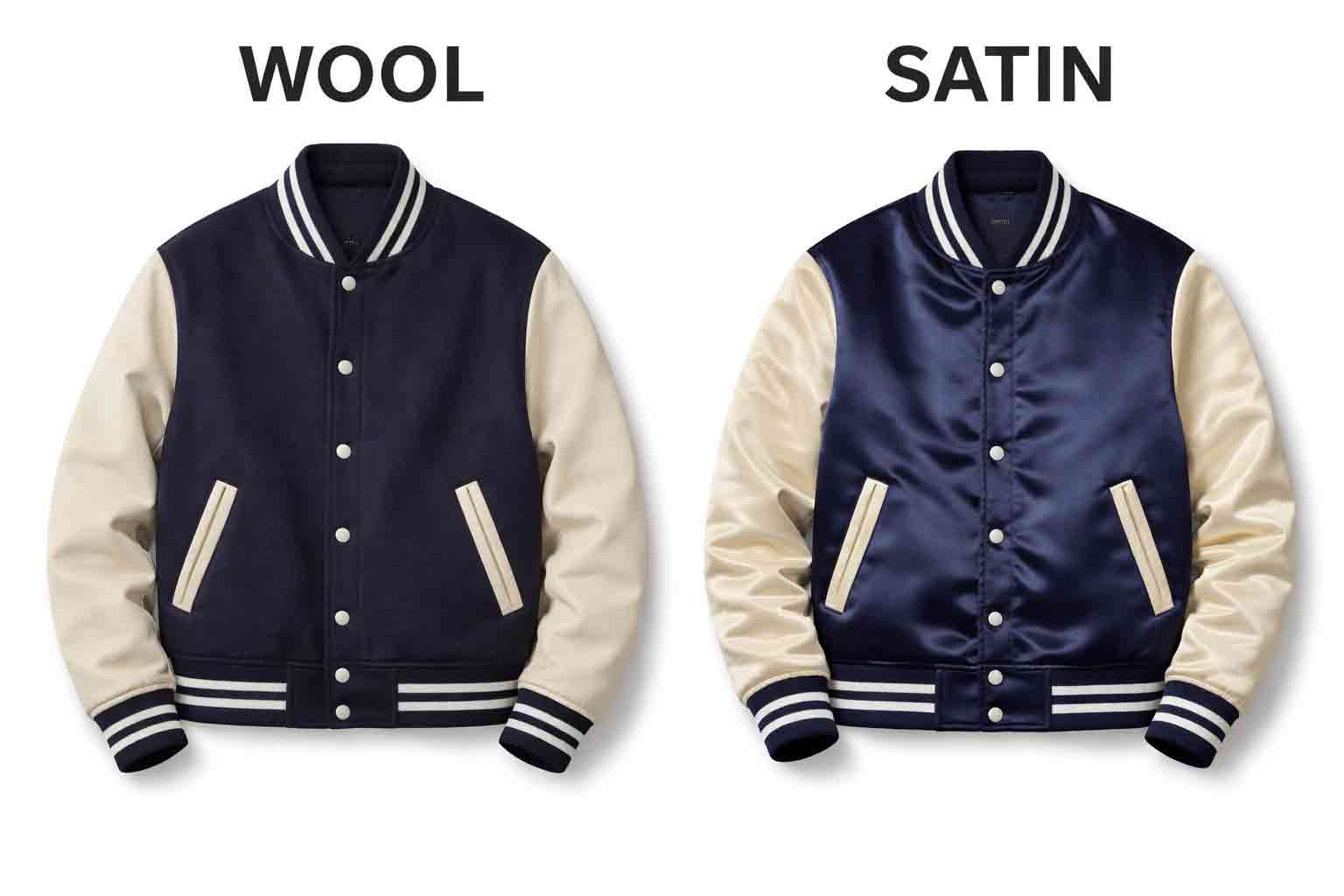
When you walk into a room wearing a varsity jacket, the material speaks before you do. The texture, the sheen, the weight — everything about it tells a story. And if you’ve been shopping for a varsity jacket lately, you’ve probably noticed that most of them come down to one key choice: wool body or satin body. These two materials define how a jacket looks, feels, wears, and lasts — and knowing the difference can save you from a purchase you’ll regret.
This article breaks down everything you need to know about the difference between a wool varsity jacket and a satin varsity jacket, so you can make a confident, informed decision.
What Is a Wool Varsity Jacket?
A wool varsity jacket — also called a letterman jacket — features a body made from wool fabric, typically paired with genuine or faux leather sleeves. This is the classic American design that has been around since the late 1800s, originally worn by college athletes to show off their earned letters.
Wool used in varsity jackets is usually a melton wool blend, which is tightly woven to create a dense, smooth surface that resists wind and light rain. This fabric has a thick, structured feel that gives the jacket its iconic boxy silhouette. The weight of the wool gives the jacket substance — when you hold a quality wool varsity jacket, you feel like you’re holding something that’s built to last.
How Does Wool Feel to Wear?
Wool is a natural insulator. It traps body heat and keeps you warm, which is why traditional letterman jackets were designed for fall and winter wear on the sidelines or the bleachers. The melton wool surface also takes embroidery exceptionally well, which is why chenille patches, embroidered letters, and custom logos always look cleaner and more defined on wool than on most other fabrics.
The fabric breathes moderately well for a heavy material, and over time, a well-maintained wool jacket holds its shape and structure without losing its body. It’s a fabric that ages with dignity.
What Is a Satin Varsity Jacket?
A satin varsity jacket uses a satin weave fabric for the body instead of wool. Satin is a lightweight, silky material with a glossy, reflective surface on one side and a matte finish on the other. Unlike wool, which is a natural fiber, most satin used in varsity jackets is made from polyester, though higher-end options use silk or silk blends.
The satin varsity jacket has a completely different energy compared to its wool counterpart. It’s sleeker, lighter, and has a more fashion-forward or streetwear-inspired look. The glossy surface catches light and gives the jacket a bold, eye-catching finish that you can spot across a room.
How Does Satin Feel to Wear?
Satin is smooth, almost slippery to the touch, and significantly lighter than wool. It doesn’t offer the same level of insulation, making it a better choice for mild weather, spring and fall layering, or indoor wear. Because satin is a tighter, flatter weave, it doesn’t trap heat as effectively — which can actually be a benefit if you’re wearing a varsity jacket more as a style statement than as outerwear protection.
Satin jackets tend to be more fitted and flexible than their wool counterparts. They move with your body more freely and feel less structured overall.
Wool vs Satin Varsity Jacket: The Core Differences
Is a Wool or Satin Varsity Jacket Warmer?
Wool is significantly warmer than satin. Wool’s natural fibers create tiny air pockets that hold warmth close to the body, while satin — being a thin, tightly woven synthetic — provides minimal insulation. If you’re planning to wear your varsity jacket as your primary outer layer during cold months, wool is the clear choice. Satin works better as a layering piece or a jacket you grab when the weather is mild but not cold.
Which Jacket Has Better Durability?
Wool varsity jackets are generally more durable for long-term, everyday wear. Melton wool is dense and resistant to tearing, and when paired with leather sleeves, the entire jacket can last for decades with proper care. It’s not unusual for someone to wear a well-made wool letterman jacket for 10 to 20 years and still have it looking presentable.
Satin, on the other hand, is more delicate. The smooth surface is prone to snagging, tearing, and pilling if it comes into contact with rough surfaces regularly. Satin varsity jackets are better suited for occasional wear rather than daily use in rugged conditions.
How Do They Differ in Appearance?
This is where personal style plays the biggest role. Wool varsity jackets have a classic, heritage look — structured, collegiate, and timeless. They’re the jacket style associated with high school athletes, Ivy League aesthetics, and Americana culture. If you’re going for that traditional letterman look, wool is non-negotiable.
Satin varsity jackets have a modern, fashion-forward appearance. The glossy finish gives them a sleek, almost luxurious look that’s associated with streetwear, hip-hop culture, and contemporary fashion. Brands and designers frequently use satin varsity jackets as statement pieces because the reflective surface amplifies colors and prints in a way that wool simply cannot replicate.
Which Material Is Better for Custom Embroidery and Patches?
Wool wins for traditional embroidery and chenille patches. The texture and density of wool provides a stable surface for detailed embroidery, and chenille patches adhere cleanly and stay in place over time. The contrast between a plush chenille patch and the smooth wool surface is part of what makes a classic letterman jacket look so sharp.
Satin can also hold embroidery, but the slick surface requires more precision during the embroidery process, and patches may not adhere as firmly over time without reinforcement. That said, screen-printed or sublimated designs often look more vibrant and crisp on satin because the smooth surface allows for better ink saturation and color accuracy.
Wool vs Satin Varsity Jacket Price: Which Costs More?
Wool varsity jackets are typically more expensive than satin ones. The cost of melton wool fabric is higher than polyester satin, and manufacturing a wool jacket with leather sleeves requires more labor and quality control. A well-made wool letterman jacket from a reputable manufacturer can range from $150 to $500 or more, depending on customization and materials.
Satin varsity jackets are more budget-friendly in most cases, making them a popular choice for promotional merchandise, team giveaways, and fashion brands that want to produce varsity-style jackets at scale without the premium cost.
Who Should Buy a Wool Varsity Jacket?
A wool varsity jacket is the right choice if you want the authentic, traditional look and feel of a classic letterman jacket. It’s ideal for students, athletes, and anyone who values heritage style and genuine craftsmanship. If you’re commissioning a custom jacket with embroidered letters, team names, or chenille patches, wool is the material that honors the original tradition and produces the most professional-looking result.
It’s also the better long-term investment. If you’re buying a jacket you want to wear for years — not just a season — wool’s durability and timeless aesthetic make it worth every dollar.
Who Should Buy a Satin Varsity Jacket?
A satin varsity jacket is the right move if style and visual impact are your top priorities. It’s popular in streetwear, fashion collaborations, music merchandise, and event branding because the glossy finish photographs well and makes colors pop. If you’re going for a bold, eye-catching jacket that’s lightweight and easy to layer, satin delivers that without question.
Satin varsity jackets are also smart for warmer climates or indoor settings where the extra warmth of wool isn’t needed or wanted. They’re lighter, easier to pack, and often available in a wider range of colors and prints thanks to the sublimation printing process that works so well on polyester satin.
Can You Get a Varsity Jacket With Both Wool and Satin Elements?
Yes — and many custom jacket makers offer exactly this. Some designs use a wool body with satin lining, giving you the structured, warm exterior of a classic letterman jacket with a smooth, comfortable satin interior that’s easy to put on and take off. Others may combine satin panels with wool accents for a contemporary hybrid look.
This kind of customization is increasingly common in the fashion and streetwear space, where designers play with material combinations to create jackets that feel original rather than strictly traditional or strictly modern.
Care and Maintenance: Wool vs Satin
Wool varsity jackets require more careful cleaning. Most should be dry cleaned or hand washed in cold water to prevent shrinkage and preserve the fabric’s structure. Avoid machine washing unless the care label specifically allows it. Store wool jackets in a cool, dry place and use cedar blocks or mothballs to protect against insects.
Satin varsity jackets are easier to care for in most cases. Many polyester satin jackets can be machine washed on a gentle cycle, though you should always check the care label. Use a low-heat setting if ironing is needed, since high heat can melt or warp the polyester fibers. Avoid contact with rough surfaces that can snag or dull the glossy finish.
Which Varsity Jacket Is More Popular Right Now?
Both styles are thriving, but for different reasons. The wool letterman jacket is experiencing a strong nostalgia revival, driven by Y2K fashion trends and a renewed appreciation for collegiate Americana. Meanwhile, satin varsity jackets are dominating the streetwear and luxury fashion space, appearing in runway collections and influencer wardrobes alike.
The truth is, neither has fallen out of fashion — they’ve just claimed different corners of the style world. Your choice depends entirely on where you see yourself in that landscape.
Conclusion: Wool or Satin — The Choice Comes Down to Purpose
The difference between a wool and satin varsity jacket isn’t simply about fabric — it’s about what you need the jacket to do for you. Wool delivers warmth, durability, and that unmistakable classic look that has defined the letterman jacket for over a century. Satin brings a sleek, modern edge with lightweight wearability and eye-catching visual flair that suits fashion-forward, streetwear-influenced styling.
If you’re after tradition, craftsmanship, and a jacket built to last through cold seasons and decades of wear, go with wool. If you want something bold, lightweight, and contemporary that makes a visual statement without the bulk, satin is your answer. And if you can’t choose — a hybrid design with wool body and satin lining might just be the perfect middle ground.
Either way, a well-made varsity jacket is always a smart investment in style.
Frequently Asked Questions
Q1: Is a wool varsity jacket warmer than a satin one?
Yes. Wool is a natural insulator that traps heat, making it significantly warmer than satin. Satin is lightweight and better suited for mild weather or layering rather than cold-weather protection.
Q2: Which varsity jacket lasts longer — wool or satin?
Wool is more durable for everyday, long-term wear. Melton wool resists tearing and holds its shape for years. Satin is more delicate and prone to snagging, making it better for occasional or fashion use.
Q3: Which jacket is better for custom patches and embroidery?
Wool is the better choice for chenille patches and traditional embroidery. The dense texture holds stitching and patches firmly. Satin works better for sublimation printing and screen-printed designs.
Q4: Are satin varsity jackets cheaper than wool?
Generally, yes. Polyester satin costs less to produce than melton wool, so satin varsity jackets are typically more affordable — making them popular for bulk orders, team giveaways, and promotional use.
Q5: Can I wear a satin varsity jacket in winter?
Not as a standalone outer layer in cold weather. Satin provides minimal insulation, so it works best in mild temperatures or indoors. For winter wear, a wool varsity jacket is the practical choice.