SAVE 15% . USE CODE: HOLIDAY15


How to Iron or Steam a Letterman Jacket Without Damage

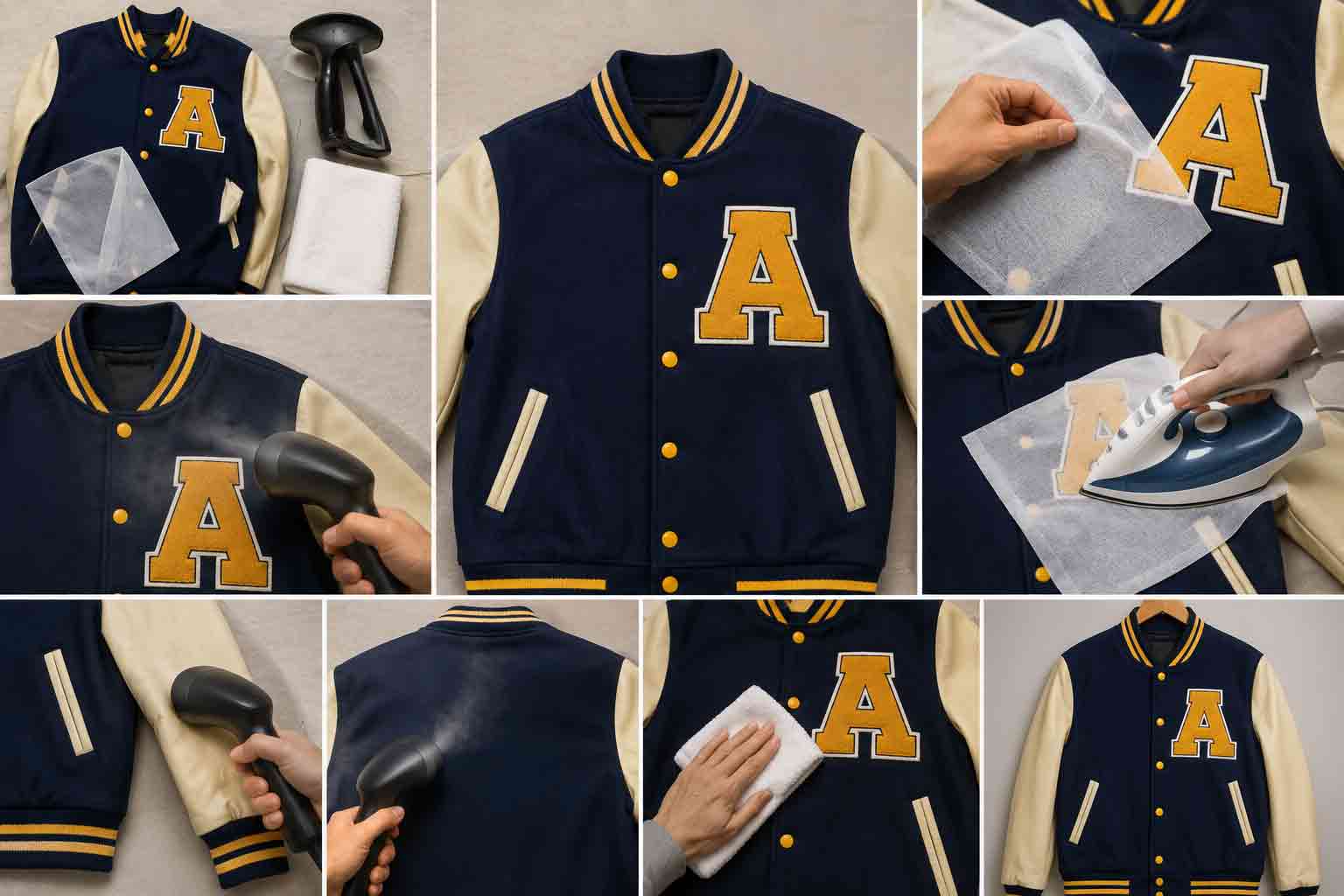
TL;DR:
- Start with a garment steamer, the gentler option for a letterman jacket.
- Hold the nozzle 1 to 2 inches from the wool body and 3 to 4 inches from leather sleeves, then dry leather right away to avoid water spots.
- If creases need an iron, always work through a press cloth: a low-medium wool setting with steam for the body, and the lowest setting with steam off for leather sleeves and chenille patches.
- Never let the iron rest in one spot.
What a Letterman Jacket Is Actually Made Of
A letterman jacket pairs two materials that need almost opposite heat settings. Wool tolerates a warm iron and steam reasonably well. Leather doesn’t. That mismatch is the entire reason a single “medium iron, light steam” instruction damages more jackets than it fixes.
The combination dates back to American high school and college teams in the 1930s, when wool-bodied jackets with leather sleeves became the standard reward for athletic and academic achievement. The body is usually melton wool or a wool blend, sometimes lined with quilted polyester or satin. The sleeves are genuine cowhide leather on traditional jackets, or vinyl on budget and modern versions. Letters and numbers typically appear as chenille patches on classic styles, or embroidered and woven patches on newer ones, with a ribbed knit trim at the collar, cuffs, and waistband. Most close with metal snaps, though some newer satin or nylon “letterman-style” bombers use zippers instead.
Custom letterman jackets with real leather sleeves are not cheap, and a lot of the ones sitting in closets are decades-old keepsakes that can’t be replaced at any price. That’s worth remembering before reaching for whatever iron setting feels fastest.
Steaming vs Ironing: Which Is Safer?
A garment steamer applies moist heat without direct pressure or contact, which makes it the gentler choice for most of the jacket. An iron clears creases faster, but only because it presses with heat and weight together, the same combination that scorches leather and flattens chenille fibers.
| Factor | Steaming | Ironing |
|---|---|---|
| Best for | Light to moderate wrinkles across the wool body | Stubborn, set-in creases steam alone can’t release |
| Risk to leather sleeves | Low, if held a few inches away and dried immediately | Higher; direct contact can crack, dull, or warp leather |
| Risk to chenille patches | Very low | Moderate; needs a press cloth and the lowest heat setting |
| Equipment | Garment steamer | Iron, plus a press cloth or thin cotton sheet |
| Pace | Slower, several passes per section | Faster per section, but needs more setup |
| Good for beginners | Yes | Only after a test patch |
For most letterman jackets, steaming first and ironing only the spots that still need it afterward gives the best result with the least risk.
How to Steam a Letterman Jacket Step by Step
Steaming the wool body
- Hang the jacket on a sturdy, broad hanger and close the snaps so the body holds its shape while you work.
- Fill the steamer and let it heat fully before starting. A half-warmed steamer sprays water instead of producing steam.
- Hold the nozzle about 1 to 2 inches from the wool, working in small vertical sections rather than one long pass.
- Smooth the fabric with your free hand just behind the steam, following the direction of the weave.
- Let the jacket air out on the hanger for at least an hour before wearing or storing it. Wool holds onto moisture longer than it looks like it does.
Steaming leather sleeves
Leather can be steamed, but it needs more caution than wool because trapped moisture, not the heat itself, is what causes staining and color bleed.
- Test on the inside of a cuff first and check for darkening or stiffness once it dries.
- Hold the steamer 3 to 4 inches away, farther than you would for wool, and keep it moving at all times.
- Wipe away any visible moisture immediately with a soft, dry cloth rather than letting it air-dry on its own.
- Once the leather is fully dry, work in a small amount of leather conditioner to replace any moisture the heat pulled out.
How to Iron Out Stubborn Wrinkles Safely
Save the iron for wrinkles that don’t budge after steaming, and put a barrier between the iron and the jacket every single time. Direct contact is what causes most of the damage people are trying to avoid.
Ironing the wool body
- Lay the jacket flat on an ironing board or padded table, then cover the area with a thin cotton sheet, pillowcase, or press cloth.
- Set the iron to its wool setting (low to medium heat) with the steam function turned on.
- Press down and lift in short, overlapping passes instead of dragging the iron across the fabric.
- Keep the iron moving constantly. Setting it down for even a few seconds can scorch the wool or leave a shine.
- Let the section cool fully before moving to the next one.
Ironing leather sleeves
Most leather-care guides and jacket manufacturers advise against ironing leather directly at all, so treat this as a last resort for sleeves too creased for steam to fix.
- Turn the jacket inside out if the seams allow it, so any heat damage lands on the inner surface rather than the visible side.
- Loosely stuff each sleeve with a rolled towel or cloth so the iron presses a rounded shape instead of a flat, doubled-over crease.
- Set the iron to its lowest setting with steam turned off. Leather and moisture together are what cause water spots and bleeding.
- Lay a press cloth over the leather and keep the iron gliding continuously, never resting in one spot.
- Test for 3 to 4 seconds on a hidden section first, check for sheen or stiffening, and only continue if the leather looks unchanged.
- Hang the jacket to cool completely, then apply leather conditioner once it has cooled.
Ironing chenille and embroidered patches
Patches sit slightly higher than the surrounding fabric, so an iron’s heat concentrates on them first.
- Always cover a patch with a press cloth before the iron passes over it.
- Use the lowest heat setting available, lower than the setting for the rest of the wool body.
- Lift and check often instead of holding the iron in place. Chenille fibers scorch and flatten quickly under sustained heat.
- If a patch was applied with iron-on adhesive instead of stitching, extra heat can re-melt the backing and cause it to shift or bubble, so keep contact time as short as possible.
Mistakes That Damage Letterman Jackets
- Ironing leather sleeves directly, with no press cloth, to save time
- Using the cotton or high-heat setting on any part of the jacket
- Steaming leather heavily and letting condensation sit instead of drying it off right away
- Pressing over a patch without a barrier, which leaves a shiny, scorched outline
- Letting the iron rest in one spot instead of keeping it in motion
- Folding the jacket for storage, which creates new creases that undo the work you just did
- Skipping a test patch on an inconspicuous area before tackling a whole sleeve
Supplies You’ll Need
- Garment steamer, handheld or full-size
- Iron with an adjustable heat dial and steam function
- A thin press cloth, pillowcase, or cotton sheet
- A soft, dry microfiber cloth
- A rolled towel or cloth for stuffing sleeves
- Leather conditioner
- A sturdy, broad hanger
Storing Your Jacket So You Iron It Less Often
The easiest way to avoid ironing a letterman jacket is to stop creases from setting in the first place.
- Hang the jacket on a wide, sturdy hanger between wears instead of folding it over a chair or shelf.
- Keep it in a cool, dry, well-ventilated closet, away from direct sunlight, which fades wool and dries out leather.
- Avoid attics and basements for long-term storage. Both tend to trap humidity that warps leather and invites mildew on wool.
- If storing for an entire season, wrap the leather sleeves separately from the wool body so moisture levels stay even across materials.
When to Skip the DIY Approach
Some letterman jackets are worth the extra caution of a professional cleaner instead of a home iron or steamer. If the jacket is heavily patched, holds sentimental or resale value, or already shows cracking on the leather, a dry cleaner experienced with varsity jackets can remove wrinkles without the trial-and-error risk of doing it yourself.
- Vintage or inherited jackets where the leather has started to dry out or crack
- Jackets covered in multiple chenille or iron-on patches, where one wrong pass could damage several at once
- Any jacket you’re not willing to risk for the cost of a professional pressing
Frequently Asked Questions
Can you put a letterman jacket in the dryer to remove wrinkles?
No. The tumbling and heat can shrink the wool body, warp leather sleeves, and loosen sewn-on patches. Air-dry the jacket flat or on a hanger instead, away from direct heat sources.
What iron setting is safe for a letterman jacket?
Use the wool setting, low to medium heat, with steam on for the wool body. Use the lowest setting with steam off for leather sleeves and patches, and always test on a hidden area first since heat tolerance varies between brands of leather and wool blends.
Will ironing damage chenille patches?
It can, mainly through scorching or melting the adhesive under iron-on patches. Covering the patch with a press cloth and keeping the iron on its lowest setting protects the fibers while still releasing the wrinkle.
Is steaming safer than ironing a letterman jacket?
Generally yes, especially for the wool body, since steaming applies heat without direct contact or pressure. Leather sleeves still need care: hold the steamer a few inches away and dry the surface immediately to prevent water spots.
How do I get wrinkles out of leather sleeves without an iron?
Hang the jacket in a steamy bathroom for 15 to 20 minutes, then smooth the leather by hand while it’s warm and slightly pliable. Finish with a leather conditioner once the sleeves have fully dried.
How often should I steam or iron my letterman jacket?
Only when wrinkles actually show up. Repeated heat exposure gradually dries out leather and flattens wool fibers, so hanging it properly between wears cuts down on how often you need an iron at all.
Quick Recap
A letterman jacket combines materials with very different heat tolerances, so the safest approach treats them separately instead of running one setting over the whole thing. Steam first, since it works without direct pressure, and bring in the iron, with a press cloth, only for creases steam couldn’t release. Leather and chenille patches need the lowest heat and the shortest contact time of anything on the jacket. Get those two things right and the jacket will outlast whatever wrinkle sent you looking for this guide.