SAVE 15% . USE CODE: HOLIDAY15


Vinyl vs Leather Sleeves on a Letterman Jacket: Which One Is Worth It?

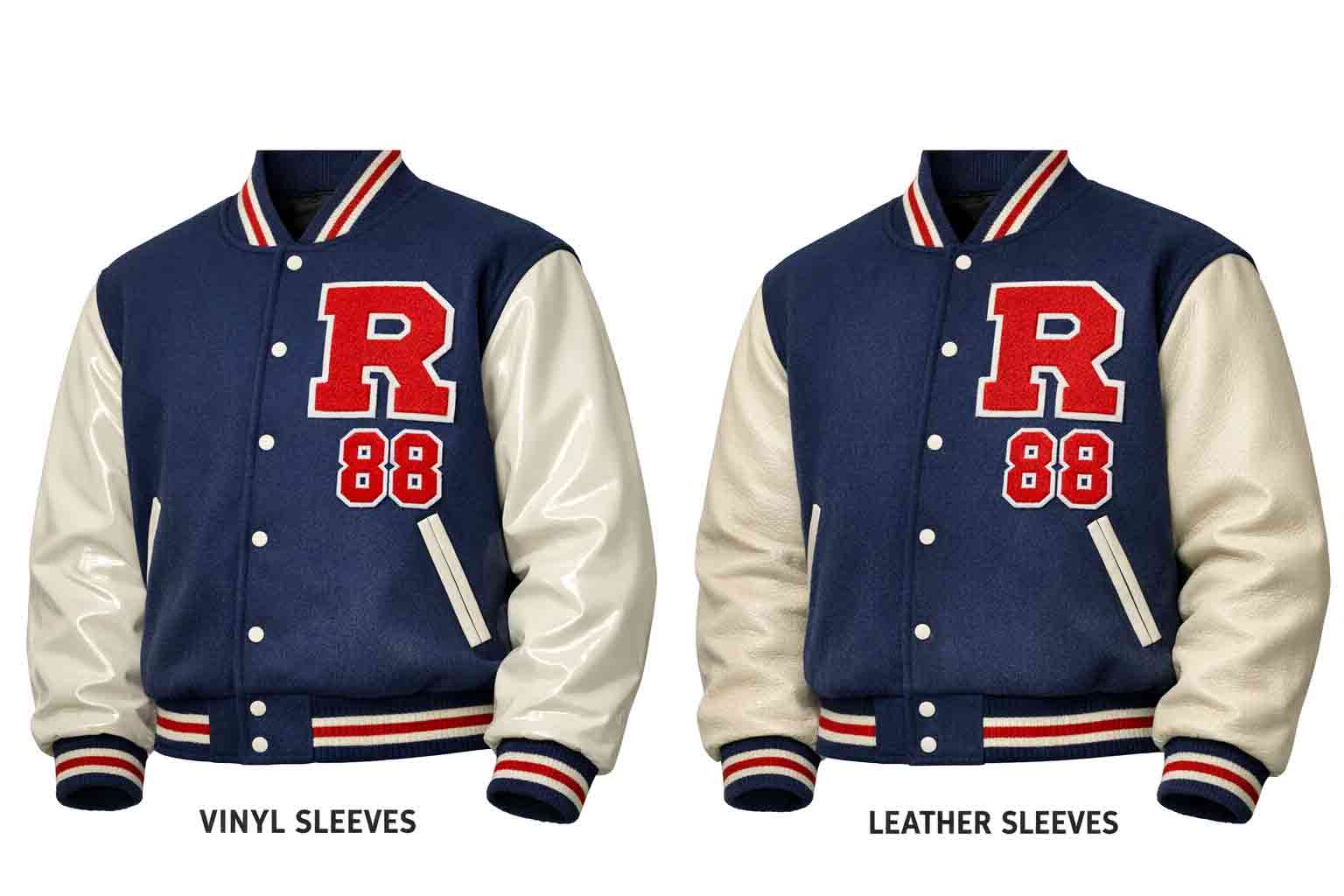
When it comes to letterman jackets, one of the most debated decisions is whether to go with vinyl sleeves or leather sleeves. It sounds like a small detail, but trust me, it is anything but. The sleeves of a letterman jacket are one of the first things people notice, and they play a massive role in how the jacket looks, feels, and holds up over time. Whether you are a high school athlete, a college student, or someone who just loves the classic varsity jacket aesthetic, understanding the difference between vinyl and leather sleeves can save you money, regret, and a whole lot of confusion.
So let’s break it all down in plain language, no fluff, no filler, just honest information that actually helps you make the right call.
What Are Letterman Jacket Sleeves Made Of?
The Two Main Sleeve Materials Explained
Letterman jackets, also known as varsity jackets, traditionally feature a wool body paired with contrasting sleeves. Those sleeves are typically made from one of two materials: genuine leather or vinyl (sometimes called faux leather or PU leather). Both serve the same purpose visually, meaning they give that sharp two-tone look that makes letterman jackets iconic. But that is about where the similarities end.
Leather sleeves are made from real animal hide, most commonly cowhide. They are processed, tanned, and finished to create a durable, natural material that develops character over time. Vinyl sleeves, on the other hand, are a synthetic material made from polyvinyl chloride (PVC) layered over a fabric base. They are manufactured to mimic the look and feel of leather at a lower production cost.
- Design your school varsity jacket with custom patches here
Vinyl vs Leather Sleeves: The Key Differences
Appearance and Initial Look
Right out of the box, both vinyl and leather sleeves can look surprisingly similar, especially on budget to mid-range jackets. A well-made vinyl sleeve can absolutely fool the untrained eye. However, if you look closely, leather has a natural texture, subtle grain variations, and a depth to its finish that vinyl simply cannot replicate perfectly. Vinyl tends to look more uniform and plasticky under bright light.
For someone buying a letterman jacket as a fashion piece or for occasional wear, vinyl can absolutely hold its own in the looks department. But for someone who wants that authentic, rich appearance that screams quality, genuine leather sleeves are the clear winner.
Feel and Comfort
This is where things get really different. Leather sleeves feel softer and more supple, especially after a break-in period. Real leather conforms to your body over time and becomes more comfortable the more you wear it. It breathes slightly better than vinyl as well, making it a more pleasant material against the skin during extended wear.
Vinyl, by contrast, feels stiffer, particularly in colder temperatures. In winter, vinyl sleeves can become uncomfortably rigid and even crack if the quality is poor. Many people who wear vinyl-sleeved jackets in cold climates report that stiffness issue as a real annoyance. In warmer temperatures, vinyl can also feel a bit sweaty and less breathable compared to leather.
Durability and Longevity
Here is where leather pulls significantly ahead. Genuine leather, when properly cared for, can last decades. It scratches, yes, but those scratches often add to the character of the jacket rather than detracting from it. A well-maintained leather-sleeved letterman jacket can be passed down through generations. Many people who still wear their father’s or grandfather’s old varsity jacket are wearing one with leather sleeves that have aged beautifully.
Vinyl sleeves, however, have a much shorter lifespan. Over time, vinyl tends to peel, crack, and flake, especially at high-flex areas like the elbow. This peeling is one of the most common complaints about vinyl-sleeved letterman jackets. Once peeling starts, it is very difficult to stop or repair effectively. The jacket may look fine after two years but can start showing serious deterioration by year four or five, sometimes even sooner depending on how often it is worn and how it is stored.
Price Difference
Let’s talk money, because that is often the deciding factor. Vinyl-sleeved letterman jackets are significantly cheaper than their leather counterparts. A decent vinyl-sleeved jacket might run anywhere from $80 to $150, while a quality leather-sleeved version can cost anywhere from $200 to $500 or more depending on the brand, customization, and leather quality.
For students or parents buying a jacket for a single school year or a couple of seasons, the lower price point of vinyl makes a lot of sense. Why spend $400 on a jacket your teenager might grow out of or lose interest in? But for someone investing in a jacket they plan to wear long-term, the cost per wear of a leather jacket actually becomes more economical over time because it simply lasts longer.
Which Sleeve Material Is Better for Customization?
Embroidery and Patches on Vinyl vs Leather
Letterman jackets are all about personalization. Chenille patches, embroidered letters, name tags, and year designations are part of what makes them so special. Both vinyl and leather sleeves can accommodate sewn-on patches and embroidery, but leather tends to hold stitching better over time without distorting or peeling around the stitch points.
On cheaper vinyl sleeves, heavy embroidery or patches near seams can sometimes contribute to peeling or cracking because the material around the stitching is under stress. Leather handles the mechanical stress of embroidery and patch attachment far more gracefully, which is why most premium custom jacket makers prefer leather for jackets that are going to be heavily personalized.
Color Options and Customization Flexibility
Interestingly, vinyl actually wins in terms of color variety. Vinyl can be manufactured in virtually any color imaginable and holds dye very consistently. Leather, while available in many colors, is more limited in its range and can be more inconsistent in shade from hide to hide. So if you need a very specific or unusual sleeve color to match your school colors, vinyl might actually give you more precise options.
Environmental and Ethical Considerations
Is Vinyl or Leather More Sustainable?
This is a question more people are asking, and rightfully so. Genuine leather comes from animal hides, which raises ethical concerns for vegans and animal welfare advocates. The leather industry also has significant environmental impact through the tanning process, which can involve harmful chemicals if not managed responsibly.
Vinyl, being synthetic, is animal-free, which appeals to many buyers. However, PVC is not exactly eco-friendly either. It is a petroleum-based product, and its production and disposal raise their own environmental concerns. Neither option is a clean winner from a sustainability standpoint, but if animal welfare is your primary concern, vinyl or modern vegan leather alternatives are the better choice.
Maintenance and Care: What You Need to Know
How to Care for Leather Sleeves
Leather sleeves require a bit more attention than vinyl. You should condition leather sleeves every few months using a quality leather conditioner to keep the material supple and prevent cracking. Avoid exposing leather to prolonged moisture, and if your jacket gets wet, let it air dry naturally away from direct heat. Store your leather-sleeved jacket on a padded hanger in a cool, dry place to maintain its shape and prevent cracking.
How to Care for Vinyl Sleeves
Vinyl is easier to clean on the surface. A damp cloth can wipe away most surface dirt and stains. However, vinyl needs to be kept away from extreme heat, which can cause warping, and extreme cold, which can cause stiffening and cracking. Vinyl sleeves should not be stored in vacuum-seal bags or compressed spaces because the material can develop permanent creases. Avoid using harsh chemical cleaners on vinyl, as these can break down the surface coating and accelerate peeling.
Who Should Choose Vinyl Sleeves?
Best Situations for Going with Vinyl
Vinyl sleeves make the most sense when you are working with a tighter budget and need the jacket for a specific period, like a school year or a sports season. They are also a smart choice for younger wearers who are still growing and may not be wearing the same jacket in five years anyway. If you are ethically opposed to animal products, vinyl is the practical alternative. For fashion-forward buyers who want bold, unusual colors that might not be available in leather, vinyl is also worth considering.
Who Should Choose Leather Sleeves?
Best Situations for Investing in Leather
Leather sleeves are the right choice when you want a jacket that is genuinely going to last and become a long-term keepsake. If you are buying a letterman jacket as a meaningful memento, something you want to keep, display, or even pass on, leather is worth every extra dollar. Athletes who want their jacket to represent a serious achievement deserve the real thing. Adults buying letterman-style jackets as fashion pieces who intend to wear them regularly will get far better value from leather over time.
What Do Most Letterman Jacket Brands Recommend?
Industry Standards and Preferences
Most reputable letterman jacket manufacturers, including brands like Varsity, Holloway, and Augusta Sportswear, offer both options but position leather sleeves as the premium tier. School programs that order in bulk often default to vinyl to keep costs down for families, while individual custom orders tend to lean toward leather when budget allows.
The consensus in the industry is clear: if you can afford leather, go for leather. The experience of wearing it, the way it ages, and the way it holds up over the years make it the superior material by most measures.
Vinyl vs Leather Letterman Jacket Sleeves: A Direct Answer for Quick Reference
Which is better, vinyl or leather sleeves on a letterman jacket? Leather sleeves are better in terms of durability, feel, aging, and long-term value. Vinyl sleeves are better for budget-conscious buyers, those who prefer animal-free materials, and those needing a wider range of colors. For a jacket you plan to keep and cherish for years, leather is worth the investment. For a jacket you need for a season or two without breaking the bank, vinyl is a perfectly reasonable choice.
Conclusion
At the end of the day, the choice between vinyl and leather sleeves on a letterman jacket comes down to your priorities, budget, and how long you intend to wear the jacket. Leather sleeves offer unmatched durability, a superior feel, and that authentic, timeless look that only real hide can provide. They age gracefully, handle customization beautifully, and become more personal with every year of wear. Vinyl sleeves, meanwhile, offer accessibility, affordability, and a cruelty-free option that still looks great in the short term.
If this jacket is meant to be a lasting symbol of your achievement, a piece you will pull out of the closet ten years from now and still be proud to wear, invest in leather sleeves. You will not regret it. But if you need something practical, affordable, and functional for right now, vinyl sleeves will serve you well without emptying your wallet. Either way, the letterman jacket itself remains one of the most iconic pieces of Americana in fashion history, and both materials can carry that legacy forward in their own way.
Frequently Asked Questions
Q1: How long do vinyl sleeves last on a letterman jacket?
Vinyl sleeves typically last two to four years before they begin to peel or crack, especially at high-movement areas like the elbows. Proper care can extend their life, but they rarely match the longevity of genuine leather.
Q2: Can you repair peeling vinyl sleeves on a letterman jacket?
Once vinyl sleeves start peeling, they are very difficult to repair permanently. Temporary fixes like vinyl repair kits exist, but they rarely hold up long-term. Replacement is usually the more practical solution.
Q3: Do leather sleeves on a letterman jacket require a lot of maintenance?
Not excessively. Conditioning them every few months with a quality leather conditioner and storing the jacket properly on a padded hanger is really all it takes to keep leather sleeves in great shape for years.
Q4: Are vinyl sleeves on a letterman jacket vegan-friendly?
Yes. Since vinyl is a synthetic, petroleum-based material and contains no animal products, it is considered a vegan-friendly alternative to genuine leather sleeves.
Q5: Which sleeve type holds patches and embroidery better?
Leather sleeves generally hold patches and embroidery better over time. Leather handles the stress of stitching without distorting or peeling around stitch points, making it the preferred choice for heavily customized letterman jackets.